Investing in people, skills and heritage: supporting the next generation of Welsh craftspeople
Three individuals from Wales were awarded bursaries to develop specialist skills in blacksmithing, millinery and woodworking, which is helping to safeguard craft traditions while opening up new pathways for people facing significant barriers to training and employment.
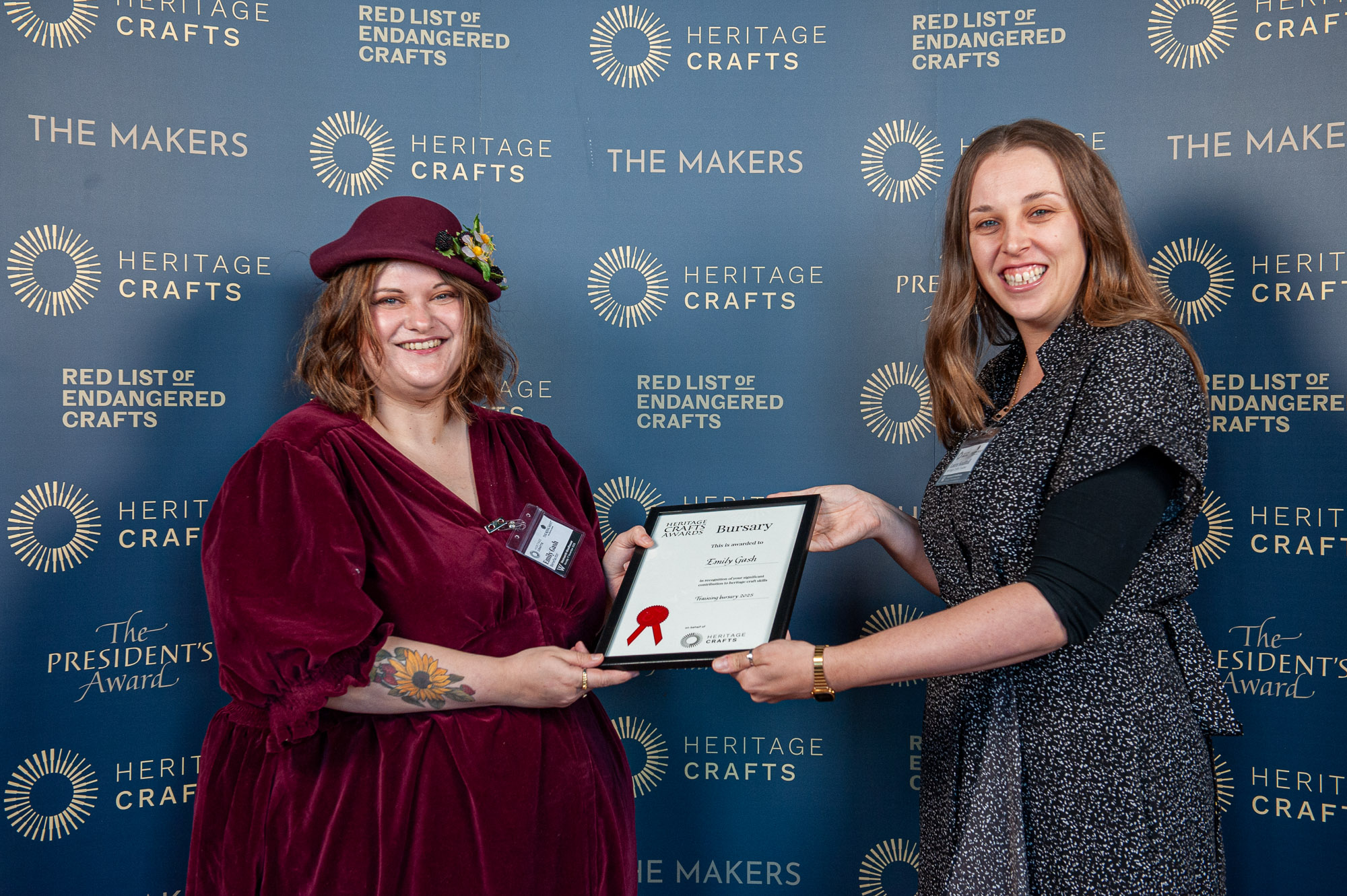
Over the past three years, the Ashley Family Foundation has awarded £41,400 of multi-year funding to the Heritage Crafts Association, to support emerging talent in traditional heritage crafts.
Three individuals from Wales were awarded bursaries to develop specialist skills in blacksmithing, millinery and woodworking, which is helping to safeguard craft traditions while opening up new pathways for people facing significant barriers to training and employment.
The bursaries supported:
- Dai from Beaumaris in blacksmithing
- Emily from Llanfairfechan in millinery
- Rae from Abergavenny in woodworking and timber conservation
Breaking down barriers to opportunity
For Dai, a part-time self-employed blacksmith and on-call firefighter, the bursary enabled access to specialist training that would otherwise have been difficult to reach due to geographical isolation and limited local provision. It funded a two-week blacksmithing course with Spike Blackhurst in Llanbrynmair, as well as a metal casting course in Liverpool.
Dai, who is dyspraxic, has faced challenges in conventional employment settings where he often felt misunderstood. Blacksmithing has provided him not only with a career path, but also with increased confidence, independence and a sense of freedom. His long-term ambition is to establish his own blacksmithing business and use his skills to restore ironwork near his local UNESCO World Heritage Site, as well as to teach blacksmithing at his local college.
For Emily, the bursary provided a vital opportunity to continue developing her millinery practice following a sudden illness and disability that ended her previous career in physiotherapy. Living in rural north Wales, and navigating neurodivergence and mobility challenges as an ambulant wheelchair user, access to structured, in-person training has been limited.
The funding enabled Emily to complete a City and Guilds Level 2 millinery qualification, alongside four days of one-to-one straw embroidery tuition with leading practitioner Claire de Waard in London, significantly advancing her skills and professional development.
Rae, a self-employed carpenter specialising in timber structures within the built environment, used their bursary to undertake three specialist training courses to deepen their conservation expertise. As a non-binary woodworker from a working-class background, Rae has experienced bias and discrimination within a traditionally male-dominated sector, with limited access to mentorship and professional networks.
Beyond individual impact
While the bursaries have directly supported three individuals, the wider impact extends far beyond personal development.
Rae has since founded The Woodworkers Alliance, a network designed to connect historically marginalised emerging makers with experienced mentors. This initiative is helping to ensure that heritage skills are not only preserved, but actively shared and made more accessible to a broader and more diverse community of practitioners.
Meanwhile, Dai’s progression has a clear community focus. His ambition to restore historic ironwork near a UNESCO World Heritage Site and to teach blacksmithing locally, demonstrates how investment in individual skills can translate into wider cultural, educational and place-based benefits.
Why this work matters
This programme demonstrates the long-term value of investing in people as the foundation of cultural preservation and community development.
Heritage crafts are not only technical skills, but they’re also living traditions that depend on knowledge being passed from one generation to the next. Without targeted support, access to training can be limited by geography, disability, financial constraints and structural inequalities within creative industries.
By providing bursaries and mentorship opportunities, this programme helps to remove some of those barriers and ensures that talent is not lost due to lack of opportunity.
Creating future ambassadors for Welsh craft
Ultimately, this funding is about more than training individuals. It is about supporting future ambassadors for Welsh heritage crafts – people who will go on to teach, mentor, restore and inspire others.
Through targeted philanthropic investment, the Ashley Family Foundation is not only helping to safeguard at-risk craft skills, but also strengthening the communities, networks and futures that depend on them.
We’re proud to support work that demonstrates how investing in people today can preserve culture, opportunity and creativity for generations to come.
Stories
Sometimes the smallest grants leave the biggest legacy
When people think about charitable giving, it's easy to assume that creating meaningful change requires significant amounts of money, and of course in some cases it does. But sometimes, the biggest differences begin with the smallest investments.